November 9, 2026 · TruVision Verification Services
On-Site Drug Testing: How It Works and What Employers Should Expect
Learn how on-site drug testing works, what employers should prepare, how DOT and non-DOT collections differ, and when mobile testing can help reduce workplace disruption.
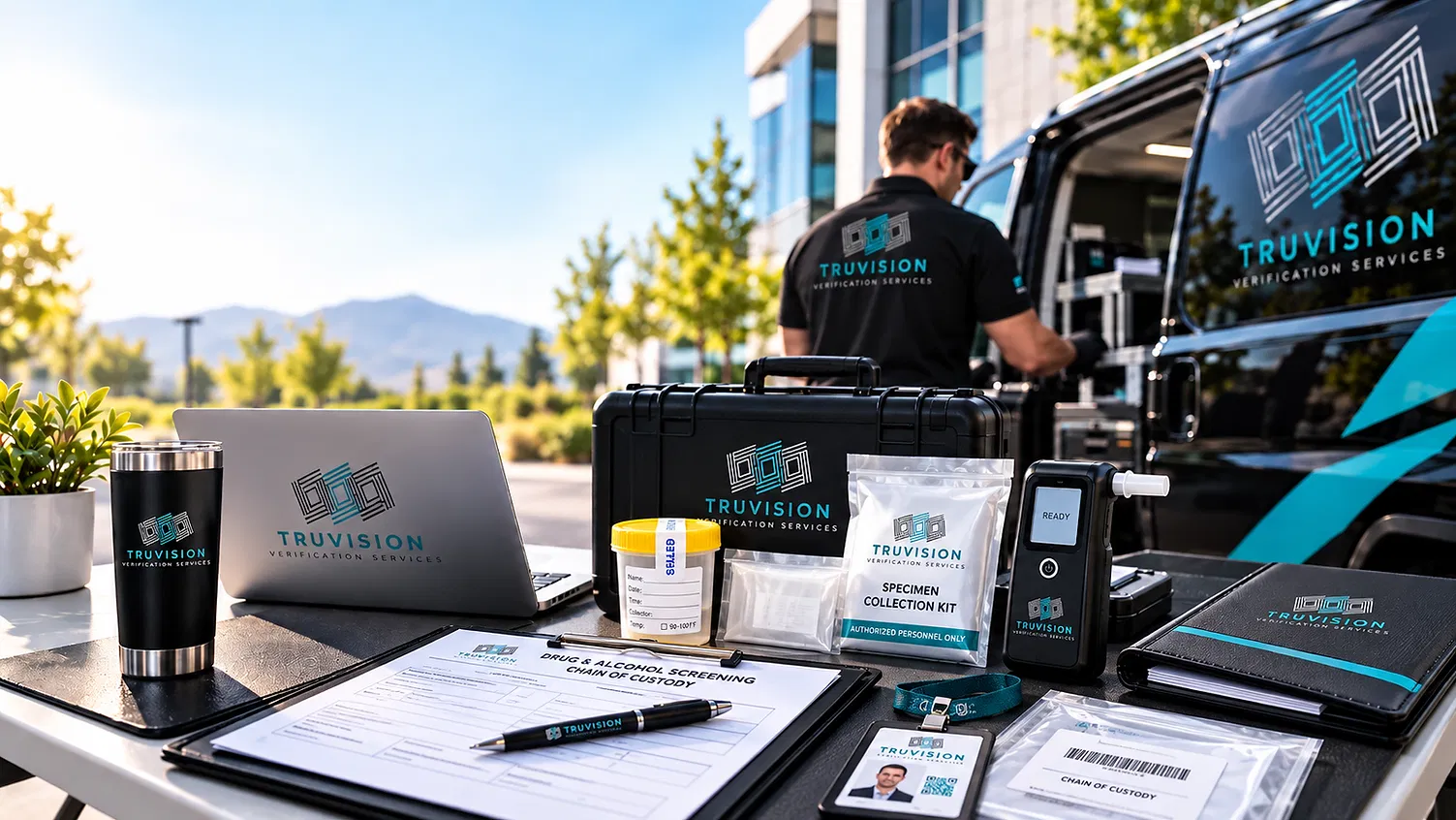
On-site drug testing means a trained collector comes to your workplace or job site to collect specimens, so employees do not need to leave the site for a clinic visit. It can make testing easier to coordinate for hiring events, multiple employees, or time-sensitive situations. The collector handles the collection and documentation; laboratory analysis is performed by qualified laboratory partners when applicable.
For employers, the practical questions are how the visit is organized, what facilities are needed, how privacy and compliance are managed, and what the service will cost. Here is what to expect.
How on-site drug testing works: step by step
Exact arrangements depend on the test type, location, number of employees, and authorization. A typical visit follows these steps:
- Schedule and confirm the request. The employer and provider confirm the location, requested test, number of employees, timing, and any applicable authorization requirements. For DOT testing, the employer should identify the designated employer representative (DER) and confirm the correct DOT test details.
- The collector arrives with supplies. The collector brings the collection materials and documentation needed for the authorized service. For breath alcohol testing (BAT), the setup and process must suit the testing requirements and support employee privacy.
- Employees check in. The collector verifies identity and explains the collection steps. Employers should help ensure employees know when and where to report, while limiting access to sensitive testing information.
- Specimens are collected in a private area. The employer provides a suitable collection space. The collector follows the procedures applicable to the test. A standard collection does not mean an employer should watch the collection; any special collection procedures must follow applicable rules.
- Chain-of-custody documentation is completed. Required forms document the specimen and its handling from collection onward. In DOT testing, the Federal Drug Testing Custody and Control Form (CCF) is used, and the collector follows Part 40 procedures for sealing and documenting the specimen.
- The specimen is sent to a laboratory when applicable. Specimens requiring laboratory analysis are shipped through the appropriate process to a qualified laboratory partner. TruVision Verification Services coordinates collections; laboratory analysis is performed by qualified laboratory partners.
- Results follow the applicable reporting route. For DOT testing, results are reviewed through a Medical Review Officer (MRO), who reports verified results to the employer's DER. For non-DOT testing, result handling follows the employer's policy and the authorized testing arrangement.
- A private restroom or room with a door that can be kept secure and used without interruption.
- Running water, if available, and the facilities required for the authorized collection.
- A place for employees to wait without crowding the collection area.
- An employee list with the names of those expected and an employer contact for check-in coordination.
- Testing authorization and consent materials required by your employer's process and the provider.
- Photo ID instructions so employees know what to bring.
- A quiet, private space for BAT if breath alcohol testing is part of the request.
- Pre-employment drug screening events or group hiring days.
- Large groups of new hires at staffing agencies, warehouses, construction sites, or manufacturing facilities.
- Post-accident or reasonable-suspicion response, when a prompt, authorized collection is needed. Response timing depends on location and availability.
- Random program pulls that need to be arranged around shifts or multiple work areas.
- Multi-location or staffing operations that need coordinated scheduling across sites.
- After-hours incidents, when an employer needs to ask about time-sensitive service availability.
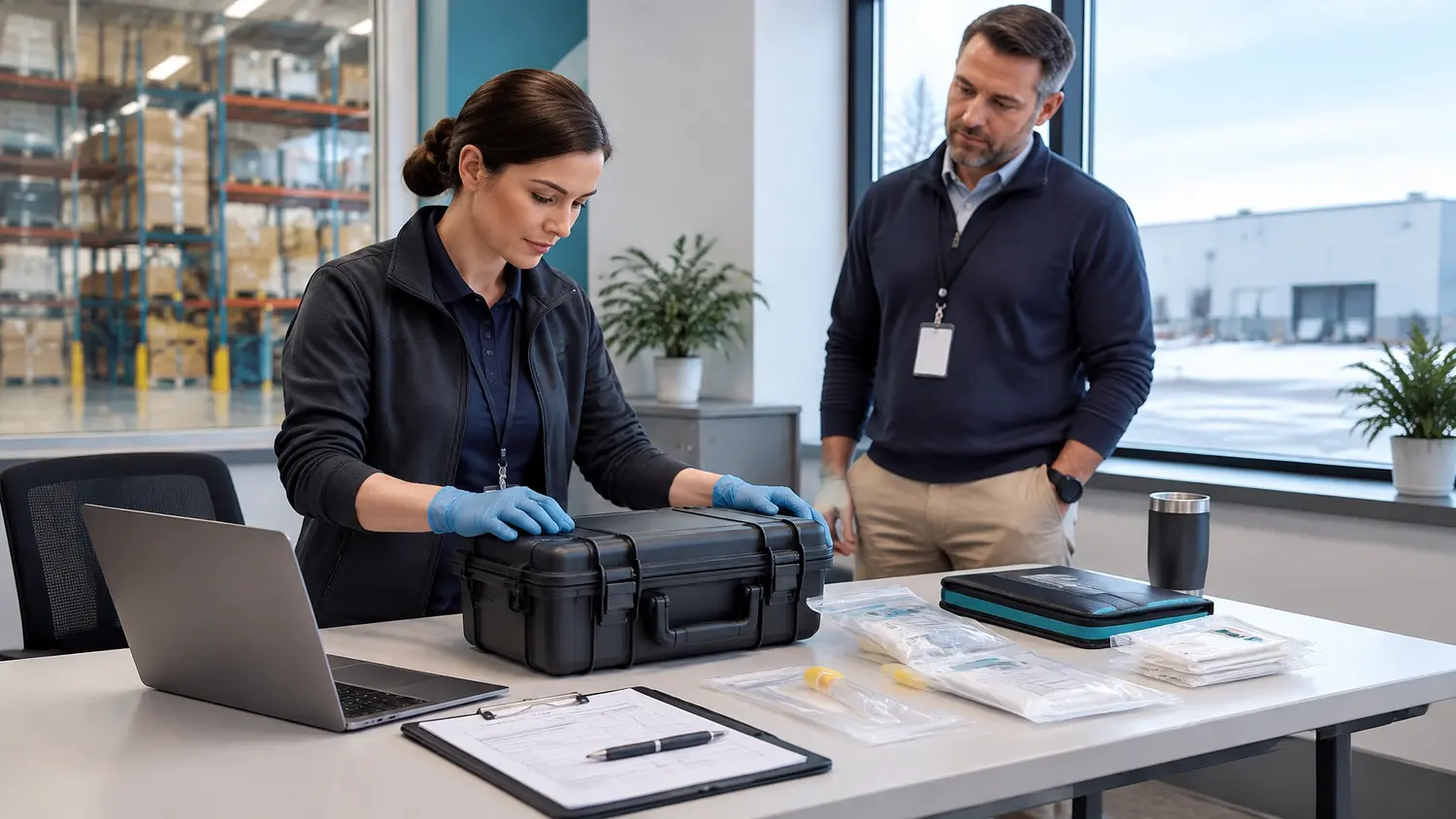
On-site vs. sending employees to a clinic
Neither option is best for every employer. Compare the operational trade-offs before deciding.
| Consideration | On-site collection | Clinic collection |
|---|---|---|
| Downtime | Employees may avoid travel and time away from the job site, though they still need to be available during the visit. | Employees travel to and from the clinic, which can add time away from work. |
| Scheduling | A visit can be coordinated for a group or a specific workplace, subject to provider availability. | Employees may attend individually, based on clinic hours and appointment or walk-in availability. |
| Privacy | Requires a private, appropriate space at the workplace and careful control of access. | The clinic manages its own collection space and check-in process. |
| Cost control | A group visit may consolidate travel and coordination, but pricing depends on location, service, volume, and scheduling. | Employers may have less control over when employees travel; clinic fees and other costs depend on the arrangement. |
| Post-accident speed | A mobile response may reduce the need for an employee to travel, but dispatch timing depends on location and availability. | The employee must reach the clinic, subject to transportation and clinic hours. |
| Employee availability before collection | The employer can coordinate when employees report and maintain appropriate workplace procedures while they wait. This is not permission to observe the collection. | The employee leaves the site to attend, so workplace coordination before collection may be more limited. |
Cost control is not the same as a guaranteed lower price. Ask for a quote that explains travel, group size, service fees, after-hours charges, and any minimums that may apply.
DOT vs. non-DOT on-site collection
DOT drug testing applies to employees and tests covered by federal transportation rules. Collections must follow 49 CFR Part 40, including use of DOT-qualified collectors and required documentation. DOT urine collections use a split specimen, and results go through an MRO before being reported as verified to the employer's DER. The U.S. Department of Transportation provides additional information on Part 40 requirements.
Non-DOT drug testing is generally governed by the employer's written policy and the testing arrangement rather than DOT Part 40. Employers should identify the test type, collection and result process, and any applicable state or local requirements before scheduling. Minnesota employers should confirm their obligations under applicable laws and policies.
A provider can help clarify service requirements, but this article is not legal advice. Confirm the applicable rules with a qualified provider or employment counsel, especially when deciding whether a position or test is DOT-regulated.
What to prepare before the collector arrives
A little preparation can keep a visit organized and reduce waiting. Confirm the site plan with your provider in advance. Depending on the test, prepare:
Tell the provider about site access, parking, security check-in, shift schedules, and any facility limitations before the appointment. For a group, stagger reporting times if your operations cannot release everyone at once.
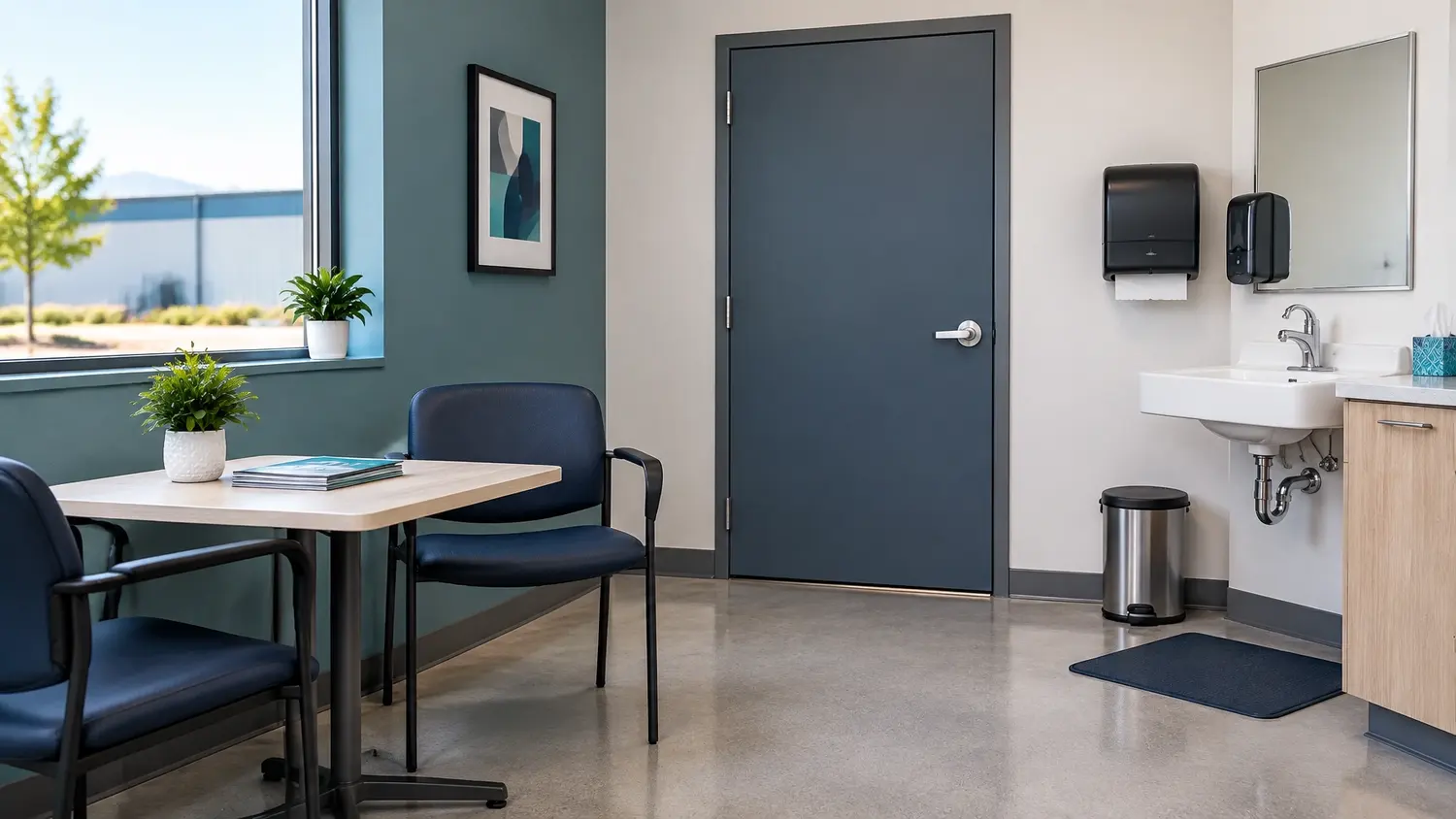
When on-site testing makes the most sense
On-site testing can be useful when coordinating travel to a clinic would be difficult or disruptive. Common situations include:
For an employer comparing a clinic with a mobile drug testing provider, consider the number of employees, travel time, shift coverage, privacy arrangements, location, and urgency. Mobile service can simplify coordination, but it still requires advance planning and a suitable collection space.
Common questions employers ask
How long does an on-site visit take?
It depends on the number of employees, type of testing, check-in process, site setup, and whether any collection issues arise. Share the expected group size and available time window when requesting a quote so the provider can discuss scheduling.
Can you test one employee, or do I need a group?
A group is not always required. Employers may request an individual visit or coordinate testing for several employees. Availability, location, authorization requirements, and any applicable fees depend on the specific request.
Who sees the results?
Access depends on the test type and authorized reporting process. For DOT testing, verified results are reported through the MRO to the employer's DER. For non-DOT testing, the employer should define who is authorized to receive results and protect confidential information under its policies and applicable requirements.
Can you come after hours or on a weekend?
After-hours or weekend service may be available for eligible requests. Availability is subject to availability, location, authorization requirements, and applicable after-hours fees. Confirm the location and timing directly with the provider before relying on a response.
Do you serve greater Minnesota and the Twin Cities?
TruVision Verification Services provides direct mobile and on-site services in eligible Minnesota areas, including the Greater Twin Cities, and coordinates eligible nationwide services through established partners. Coverage depends on location, service, and scheduling.
Plan an on-site testing visit
On-site testing can help employers coordinate collections while keeping employees closer to the workplace. The best setup begins with a clear test request, a private collection space, a prepared employee list, and a plan for managing work coverage and confidential results.
To discuss employer drug testing, including DOT and non-DOT collection services, mobile and on-site workforce solutions, or to request a business solution, call 952-388-0048. TruVision Verification Services is based in Bloomington, MN, with mobile and on-site coverage across Minnesota and eligible nationwide coordination through partners. Scheduling and service are subject to availability, location, authorization requirements, and applicable after-hours fees.
Need help with a service?
Talk with our team about screening, verification, or document support.